



When we talk about sustainable fashion, we often hear the same story: it’s hard, it’s expensive, the system is broken, and growth inevitably comes at a cost.
But every now and then, a brand comes along that challenges that narrative — and proves that scaling can be a force for good.
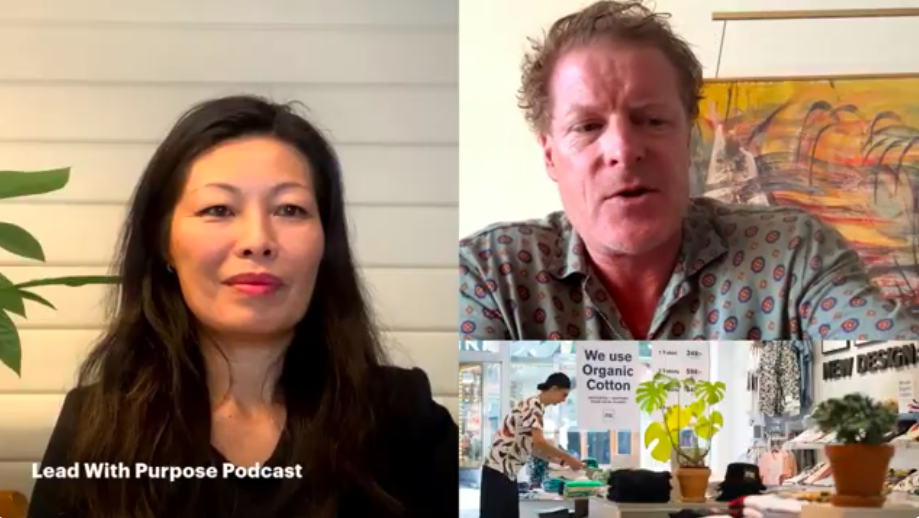
In my recent conversation with Johan Graffner, founder of Dedicated, we explored his 20-year journey building one of Scandinavia’s most respected low-impact fashion brands. What unfolded was a refreshingly honest look at values-driven leadership, sustainable growth, and what it really takes to build a conscious fashion company that lasts.
The full interview here: https://youtu.be/Db3sdegkwBI
From Skateboarding to Sustainable Fashion
Johan didn’t follow the traditional path into fashion. His roots were in skateboarding — importing skate products, travelling the world, meeting communities, and learning firsthand how creativity and culture could shape a business.
But the real turning point came in 2007, when his early retail concept switched to organic cotton. What he thought would be a small improvement opened what he calls “Pandora’s box”: the harsh truth about fashion’s chemical intensity, water usage, and exploitation of farmers and textile workers.
From that moment, the direction was clear — whatever he built next had to do better.
The Birth of Dedicated
Dedicated emerged as a response to a gap in the market: sustainable clothing that wasn’t boring. At the time, Johan noticed two problems:
- Purpose-driven brands were often too basic for modern consumers.
- Popular fashion brands were offering trend-led styles but taking zero responsibility for their impact.
Dedicated aimed to bridge that gap with:
- Bold graphics and colours
- Streetwear-inspired cuts
- Organic and fair-trade certified fibres
- Half the carbon footprint and zero chemicals compared to conventional production
Today the brand is sold in 300+ stores across Europe, employs around 30 team members, and operates several branded stores in Sweden—all while staying firmly rooted in its founding values.
The Reality of Building a Sustainable Brand
Johan didn’t sugarcoat the challenges. Running a conscious fashion brand involves thousands of micro-decisions, each with trade-offs. You have fewer fabric options, fewer factories, longer lead times, higher risks — and a much narrower path in general.
But his philosophy centres around a powerful guiding question:
“Does this decision create a net benefit?”
(Or as they say in Swedish: nettonytta.)
Not every choice is perfect — but the focus is on the decisions that create the greatest positive impact across the supply chain, for the planet and for the people within it.
Scaling to Matter — Not Scaling for the Sake of Growth
One of the biggest debates in sustainable fashion is whether scaling is inherently harmful. I shared my own experience with Johan — how I couldn’t bring myself to scale my previous brand after I realised more production simply meant more environmental burden.
Johan offered a different lens:
“If you grow, you gain the power to matter more.”
Scale allows Dedicated to:
- Use more efficient, lower-impact dyeing processes
- Adopt regenerative cotton (ROC certified)
- Engage factories that require higher order volumes
- Influence better standards across the supply chain
Growth, for them, isn’t just commercial — it’s strategic impact.
The Most Difficult Part of Running a Conscious Brand
When asked what the biggest barrier is, Johan was clear:
Limitation.
You can’t use most fabrics.
You can’t buy off-the-shelf materials.
You have to start from fibre → spinning → knitting/weaving → dyeing → finishing.
You add months to your production timeline.
And you take on the costs of certifications, audits, and ethical processes that others avoid.
The brand taxes itself in order to uphold its values — and that makes everything harder.
But it’s also why their impact is real.
Advice for New Sustainable Fashion Founders
With over 20 years in the industry, Johan has seen cycles of growth, “green” booms, eco-fatigue, and markets becoming crowded. His advice is grounded and sobering:
1. Building a brand is an ultramarathon.
It’s not a sprint. It’s not even a marathon.
Expect decades, not months.
2. Perfect the product.
If the product isn’t desirable, aspirational, and relevant, sustainability alone will not carry it.
3. Double down on sales.
Brand-building is relational. Stores take risks putting a new brand on their shelves. Without consistent sales, sustainability alone won’t sustain a business.
4. Find your crowd.
Know your customer deeply. Dedicated wins by making sustainability the silver lining — but style, colour, and expression come first.
5. Stay true, but stay practical.
You won’t always have perfect solutions. For swimwear? They use the best option available: recycled polyester.
Consumers Are Changing—But Slowly
Since 2006, Johan has seen multiple “waves” of consumer awareness. But recently, with cost-of-living pressures, he’s noticed what he calls “green fatigue” — where even organic food is being avoided.
Consumers still buy clothes, but sustainability isn’t always their top driver. They want to look good, feel something, and trust that the brand has done the work behind the scenes.
Dedicated’s approach?
Make the impact real — but let the product speak first.
What’s Next for Dedicated?
The brand continues to push forward with innovations such as:
- 100% fair trade cotton across its entire collection
- Expanding Regenerative Organic Certified cotton
- Launching a 100% recycled denim line with the lowest known carbon footprint
- Increasing biodiversity-boosting farm partnerships
- Strengthening supply-chain transparency
And as Johan noted, they’re always looking for better options — and invite others to share solutions so they can keep improving.
What Success Means After 20 Years
When asked what success looks like now, Johan’s answer wasn’t about revenue or scale:
“We know this business won’t make us billionaires but we’ve affected a lot of lives in a positive direction.””
Fair wages for farmers.
Better working conditions in factories.
Children who can go to school.
A supply chain protected by real certifications.
And a team whose work reduces harm instead of accelerating it.
This is success at its most human.
Fashion Can Do Good
Dedicated stands as proof that fashion, when built with intention, transparency, and creativity, can be a driver of environmental and social good.
As the conversation ended, I was reminded of the deep truth beneath Johan’s story:
Sustainability isn’t the absence of impact—it’s the pursuit of better impact.
And for 20 years, Dedicated has stayed true to that pursuit.
Watch the full interview on Youtube: https://youtu.be/Db3sdegkwBI
Dedicated’s webiste: https://www.dedicatedbrand.com/


Comments +